
Agile Mindset
Why most agile transformations fail and what to do instead
The problem is not agile
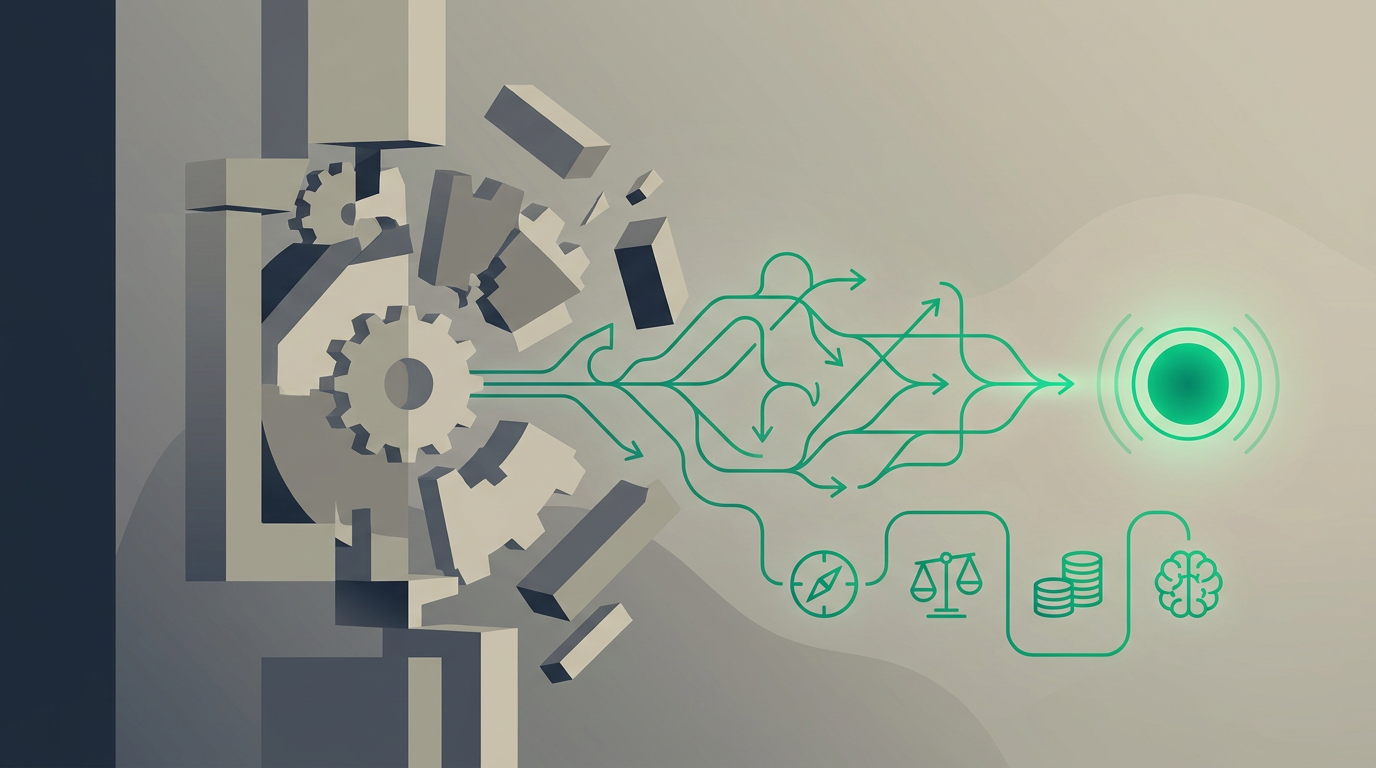
Most agile transformations do not fail because agile is wrong. They fail because organizations try to install agile on top of a system that still rewards the opposite behavior.
Teams are told to be empowered, but every meaningful decision still moves up the chain. Leaders ask for faster delivery, but funding and planning still happen once a year. Product teams run sprints, but success is still measured by output, utilization, and hitting a fixed scope.
The result is a familiar pattern:
- Teams adopt standups, boards, and retrospectives.
- Roles are renamed, but authority does not change.
- Work is broken into smaller tasks, but priorities still shift constantly.
- Leaders expect agility, but keep managing through control and prediction.
This creates agile theater. It looks different on the surface, but the operating model stays the same.
Why transformations get stuck
Most programs start with a rollout plan. Train people. Choose a framework. Launch new teams. Measure adoption. This can create momentum, but it rarely changes how work really flows.
The deeper issues are usually harder to see:
- Too many priorities compete for the same people.
- Teams depend on other teams for every important delivery.
- Decision rights are unclear or too centralized.
- Planning is separated from learning.
- Leaders measure delivery activity instead of customer value.
- People are afraid to raise risks early.
When these issues are ignored, teams become the place where organizational dysfunction shows up. They are asked to move fast while carrying slow governance, unclear strategy, and overloaded capacity.
That is why agile often gets blamed for problems it did not create.
What to do instead
A better approach starts with the work, not the framework.
Before changing roles or ceremonies, understand how value moves through the organization today. Where does work start? Who decides what matters? Where does it wait? Where does it get reworked? Which decisions slow everything down?
Then redesign the system around a few practical shifts.
1. Start with fewer priorities
Agile does not fix overload. In fact, it makes overload more visible.
If everything is important, teams spend their time switching context, managing dependencies, and explaining delays. Leaders need to make clear choices about what matters most and what will stop.
Good questions to ask:
- What are the top three outcomes we are trying to improve?
- Which work does not support those outcomes?
- What are we willing to pause or stop?
Focus is one of the strongest signals of real leadership commitment.
2. Move decision rights closer to the work
Teams cannot be accountable for outcomes if they cannot make decisions.
Empowerment is not a slogan. It requires clear boundaries. Leaders should define the intent, constraints, and success measures, then give teams room to decide how to achieve them.
This often means changing approval processes, governance forums, and escalation habits. Without that, teams may look agile but still wait for permission.
3. Fund outcomes, not projects
Project funding pushes organizations to lock scope too early. It assumes we know the answer before the work begins.
Agile works better when funding is connected to persistent teams and measurable outcomes. This lets teams learn, adapt, and invest in the most valuable opportunities over time.
Instead of asking, “Did we deliver the project?” ask, “Did we improve the customer or business outcome we funded?”
4. Make leadership behavior part of the transformation
Many agile transformations focus heavily on teams and lightly on leaders. This is backwards.
Leaders shape the environment. If they demand certainty, punish bad news, or override priorities, teams will protect themselves. They will optimize for looking safe instead of learning fast.
Leaders need to practice different behaviors:
- Set direction without prescribing every step.
- Ask better questions instead of demanding instant answers.
- Remove blockers that teams cannot solve alone.
- Reward learning, not just delivery volume.
5. Treat transformation as ongoing design
There is no final agile state. Organizations change, markets change, and ways of working need to evolve.
The goal is not to complete a transformation. The goal is to build the ability to keep improving how work gets done.
That means using real evidence. Look at lead time, customer outcomes, quality, employee engagement, and decision speed. Use these signals to adjust the operating model, not just team practices.
The real shift
Agile transformation fails when it becomes a method rollout. It succeeds when it becomes a redesign of how the organization makes decisions, focuses effort, and learns.
Do not start by asking, “Which agile framework should we use?”
Start by asking, “What is stopping our people from delivering value sooner, safer, and with better learning?”
That question leads to better change.